Here's Downey in the upcoming film, he's behind Stiller:

Every time I am asked to define my ethnicity I have to stop and think about which aspect of my multiethnic background I should attempt to expound upon the oh-so-lucky inquisitor. Will I start by informing the individual that I am South African and Israeli? Or should I just save my energy and time, escape the awkward “oh really?” situation, and notify the ethnic reader that I am White? Or American? Participating in the grueling college application process was the first time that the question of my identity was truly brought to the forefront of my personal dilemmas. Being forced to check only one box to inform universities across the country of my ethnicity and racial background simply was not enough; doing so would just give a falsified representation of whom I am. White, a person having origins in any of the original peoples of Europe, North Africa, or the Middle East accounts for half of me, but what about the other half? My phonotypical features are most closely associated with being White, but can I really disregard, not to mention disrespect, my South African ancestry? Where is my box!
Society today is based on a set of codes that dictate how we interpret ethnicity, forcing us to make sense of the surrounding physical world by attaching particular generalizations and judgments to ones associated cultural and social experience. The Theory of Racial Formation suggests “everybody learns some combination, some version, of the rules of racial classification…forcing race to become common sense – a way of comprehending, explaining, and acting in the world.” The problem with this notion is the mere fact that race has become a matter of “common sense” rather than a process of outlining ones unique and distinct characteristics which serve to create and perpetuate their individuality. As a result, American culture identifies ethnicity by relating a variety of racial assumptions (the majority of which are false) to ones particular phenotypical traits.
As previously discussed, Americans today are not comfortable in their interactions with one another unless they can visibly identify ones ethnicity. Such identification creates a safe haven where both individuals know what associations, conversations, and behaviors are acceptable, providing each involved party with a sense of comfort. It is only now that a generation of multiethnics is emerging as a result of increased immigration in the previous generations.
In conjunction with this notion, I believe that it has become easier for multiethnics to hold on to their identity and refute the need to fit into today’s monoethnic culture because of the recent lust for the exotic that has been facilitated through modern forms of entertainment. Because I live in a generation characterized as the “most racially diverse population in the nation’s history,” such portrayals of multiethnicity have sucked the media dry of monoethnics. In addition, what is characterized as exotic, diverse and different appeals remarkably to the general public. What is most interesting about the representations of these individuals throughout the media is that as more and more multiracial individuals move into powerful positions in our economy and government, the media has been forced to downplay the racial stereotypes that are often associated
 with people of “mixed”
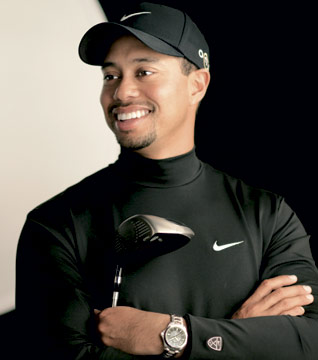
 descent. The entertainment industry, instead of marginalizing, trivializing, and placing multiethnics as the Other, are now forced to glorify blurred ethnic diversity as desirable and enviable. The lives of celebrity’s such as Mariah Carey, Tiger Woods, and Paula Abdul, are just a few icons that have managed to hold onto their multiethnic backgrounds, helping to create a more progressive view of multiethnicity. For instance, when Lenny Kravitz, whose mother is black and father is white, was asked what advice he might have for the growing number of biracial youth, he says he would “tell them that it’s a blessing to have an interracial background.”
The rising era defined by multiethnic individuals that has emerged has forced a breakdown of traditional views surrounding what it means to be of mixed descent. Parallel with this suggestion, the technological revolution of the twenty first century, which is the result of increased global broadband speeds, is paired with members of my generation, the generation of the exotic. As we continue to be the biggest advocates and experts on the issues that surround the coming technological era, race will become less and less of an issue in this rising digital world. In addition, modern forms of entertainment have already begun to lift their misconstrued portrayals and associations of race and ethnicity to the general population as more and more multiethnic individuals move into positions of power throughout the global community. Although this is promising, there is still much room for improvement as racism and the violence it provokes continues to exist throughout the world today. Examining myself as a true blend of cultures and ethnicities stemming from my maternal and paternal ancestors is something to be proud of. Even if I never have a box to check, I will always, as does Mr. Kravitz, view my multiethnicity as a hallmark of beauty.


